
Enlightenment on Kilimanjaro
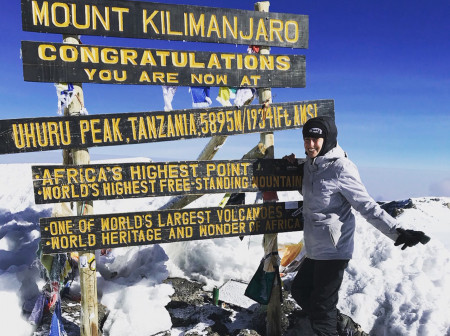
After three years spent dreaming about the hike, Elizabeth Weingarten decided to climb Mount Kilimanjaro the week of her 30th birthday — the perfect moment to figure out what she was doing with her life.
Scott and Lisa Jenkins turned a rundown farmstead into a B&B along the Appalachian Trail. By ALLISON SALERNO | PHOTOGRAPHY BY DAN WESTERGREN
It’s 6 in the morning. Gray catbirds and house wrens warble in the cherry and maple trees outside. Lisa Tracy Jenkins ’85 MBA clears a space on the kitchen island to chop vegetables. She scrambles eggs and puts slices of multigrain bread in the toaster.
A few minutes later, her husband, Scott Jenkins ’85 MBA, descends the pinewood stairs from the second floor and joins her in the kitchen. He chops strawberries, kiwis and bananas, assembling fruit plates for each of their bed-and-breakfast guests.
Nearly every day begins this way for the couple, who rise at 5:30 a.m. to prep the morning meal at their Mountain Home Bed & Breakfast near Front Royal, Va. On this spring day, they are serving nearly two dozen guests staying at the historic home, which Lisa and Scott have lovingly rehabilitated and maintained for more than a decade.
Love is the key ingredient in this story — a love that began at Northwestern’s Kellogg School of Management and a love for the legendary trail that’s only a few steps from their front door. Mountain Home is 120 yards from the Appalachian Trail (AT) and sits just a few miles from Shenandoah National Park. The home’s location in the Blue Ridge Mountains of northwestern Virginia makes it a prime destination for anyone looking to enjoy the region’s golf courses, wineries or outdoor adventures. It’s also a haven for AT hikers.
The B&B began as the Jenkinses’ audacious dream. And despite rounds of false starts and daunting odds, they persisted. Their business name says it all: Anything’s Possible LLC. “If you have faith, determination and persistence,” says Scott, “anything is possible.”
Scott and Lisa met while they were both graduate students at Kellogg in the mid-1980s. With a card and a half dozen roses, Scott proposed on Valentine’s Day 1985 in the basement of Leverone Hall.
They both built successful careers in the Washington, D.C., metro area and eventually settled in McLean, Va., a suburb of the nation’s capital. Scott managed global information technology teams at Sprint and later Ericsson. Lisa employed the marketing and information management skills she learned at Kellogg, first in marketing consulting and then for 28 years at the U.S. Environmental Protection Agency.
As Scott and Lisa pondered their next phase of life, they dreamed of retiring to a rural community “where we could live sustainably, even be an example to others, as good stewards of the natural world,” Lisa says.
In May 2012, Scott, then 51, took a six-month leave of absence from Ericsson to backpack the Appalachian Trail with the couple’s then-21-year-old son, Tracy.
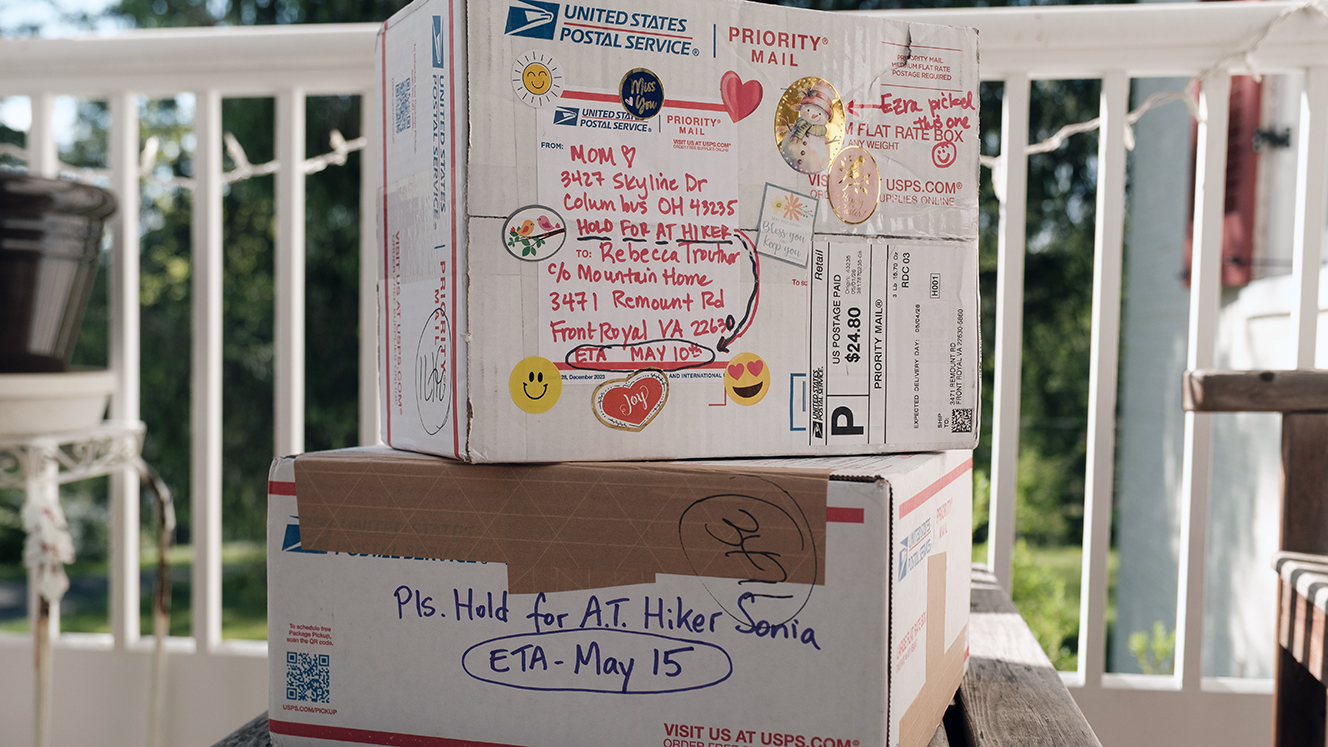
“My two favorite guys were going out into the wilderness. But I’ve hiked enough,” says Lisa, who has explored portions of the AT in each of its 14 states. “I knew they were very capable hikers and they had each other, so I didn’t worry too much. I was basically their support team while they were hiking — sending resupply boxes, shuttling between home and the trail, while also working, paying the mortgage, taking care of the dog, that sort of thing.”


Father and son began their trek at the northern terminus by summiting Mount Katahdin, the highest mountain in Maine, with Lisa. Tracy, who had just graduated from the College of William & Mary, hiked more than half the AT with Scott, then left the trail at Harpers Ferry, W.Va., to begin graduate school. (He returned to finish the AT eight years later, after earning his doctorate in archaeology. The Jenkinses also have a daughter, Marina, who lives in Texas.)
Hiking southbound, Scott carried on by himself. There were days when he wouldn’t see anyone, but he was never really alone. More than 3,000 people attempt to thru-hike the AT every year, traversing the nearly 2,200 miles in one go. During the solo portion of his hike, Scott felt a strong sense of support among hikers on the trail. “If you could bottle that experience and take it home with you, the world would be a much better place,” says Scott, who fittingly went by the trail name Possible. (Hikers often adopt a special moniker on the trail.)
“We discovered that hikers and their supporters were very generous and helpful,” adds Lisa. “There is trail magic — trail angels seem to appear just when you need them. We wanted to continue to be part of that positive, giving community.”
The AT is lined with dozens of hostels where backpackers can restock on food, take a shower and put their feet up. When Scott took a brief respite at Harpers Ferry, he and Lisa hatched the idea of buying a property for a trailside hostel they could run during retirement. The more they discussed it, the more they thought, “Why wait until retirement? We could get started now!”
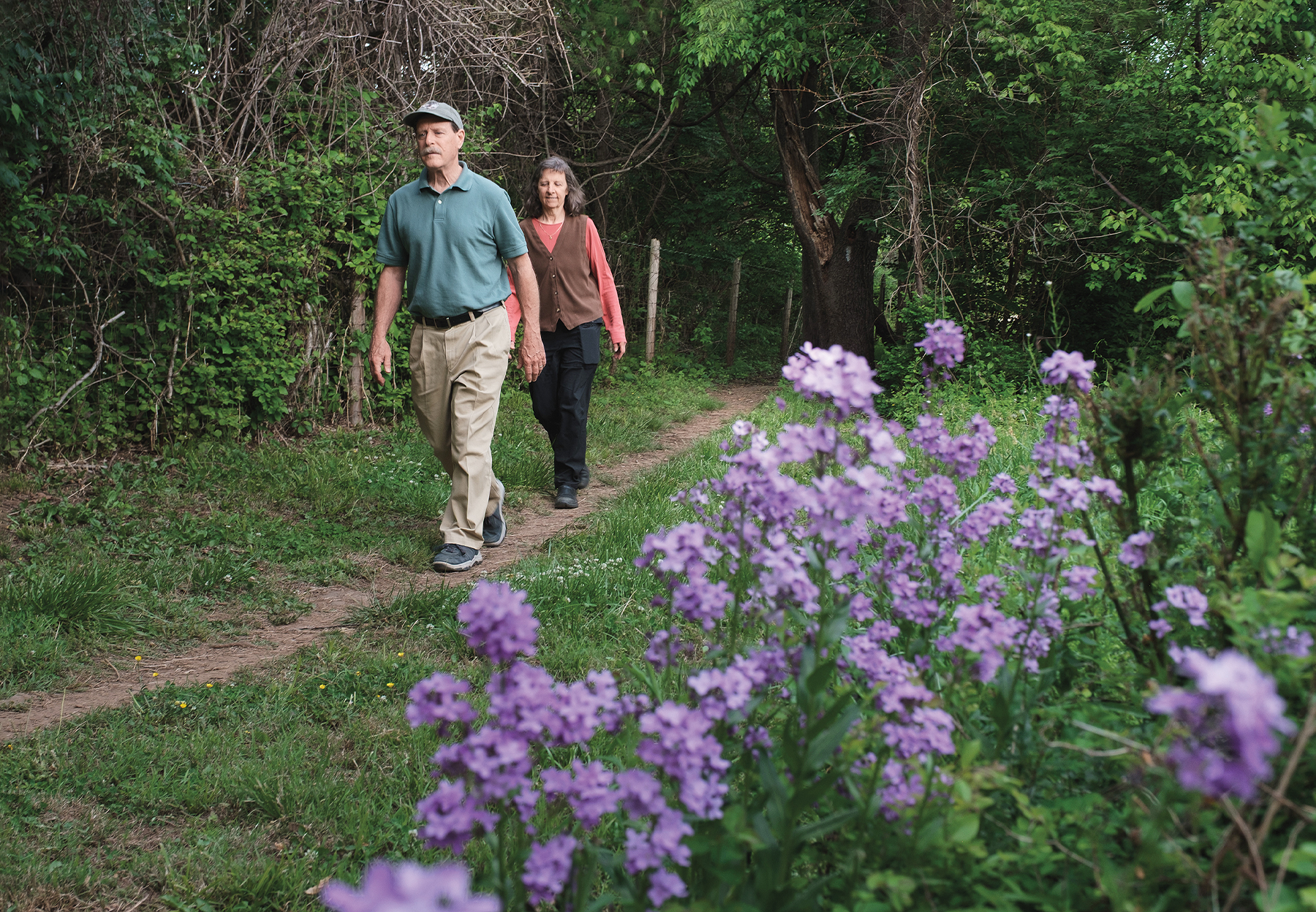
When Scott’s trek entered Northern Virginia, he and Lisa met up to scout potential properties to buy. They wanted something close enough to home that they could continue working their full- time jobs while also operating a hostel.
The Jenkinses found a 3.7-acre parcel just outside of Front Royal. The property had been on the market for four years — and had clearly been neglected for much longer. Several realtors declined to show it.
“They had given up on selling it,” Scott says. “We came up here ourselves and found a rusted-out for-sale sign buried under 3 feet of grass.” The land was so overgrown, he says, that nearby residents hadn’t even realized some of the buildings were there. The main house and its outbuildings had been neglected for 10 years.
“The roofs had failed. There was no electricity, no septic system, no plumbing, no heat,” Scott says. “There were animals and graffiti, holes in the walls and floors, tire marks in the parlor, and vines growing through the broken windows.”
But Scott and Lisa saw potential. “This place just spoke to us,” Lisa says. “We knew we could fix it up and have some nice B&B rooms.”
After talking with structural engineers and collecting cost estimates for the rehabilitation project, they put in an offer. Scott was still hiking the AT. They closed on the property in November 2012, six weeks after he finished his thru-hike.
Meet some of Mountain Home's guests in the slideshow above.
Scott and Lisa began rehabbing the property immediately. They hired a general contractor to coordinate structural repairs. They also hired plasterers, masons and carpenters with expertise in historic restoration. The previous owner had successfully nominated Mountain Home to be listed on both the Virginia Landmarks Register and the National Register of Historic Places.
The entire rehabilitation took six years, during which Scott and Lisa continued to work full time in the Washington, D.C., area. They took turns living on-site and working remotely. At times they slept in a tent on the main house’s front porch.
A few years after the B&B opened, the couple worked with two research interns and a genealogist to shed more light on the property’s origins and the people who had lived and worked there.
Originally owned by Samuel B. Gardner and his descendants, the estate had been a working farm and orchard comprising 3,000 acres. The Gardner farm produced hay and corn and was known for raising high-quality horses as well as cattle, sheep and hogs.
Further research uncovered a disturbing part of the estate’s history. The 1860 census indicates 32 enslaved men, women and children lived on the property, and records show that Gardner sold and rented enslaved people, trafficking some as far away as Missouri.
“The institution of slavery was brutal and dehumanizing,” Scott says. “This is a part of Mountain Home’s story we are working to bring to light, so the people who lived and worked here are not forgotten.”
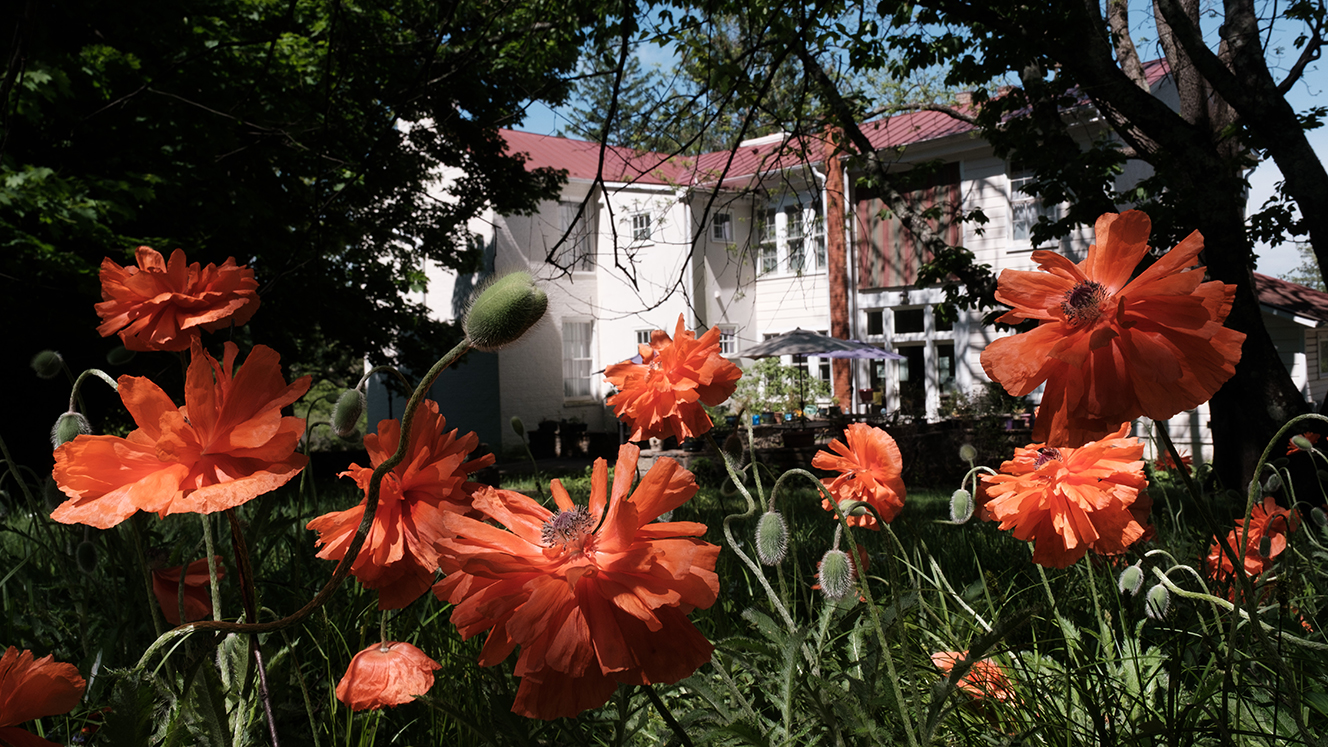
The property includes a three-story, 7,000-square-foot Greek Revival–style main house, which was built in phases between the 1780s and 1870s. There are also numerous outbuildings, including a corn shed, a meat house and the “Cabbin,” a mid-19th-century building that once housed people enslaved by the Gardners.
Now retired from their Beltway gigs, Scott and Lisa have lived at Mountain Home year-round since 2017. They rehabbed the buildings one at a time, opening the Cabbin in 2014 and the main house in 2018. More than 20,000 guests have stayed at the property since 2014.
The B&B has three private guest rooms in the main house and more than a dozen beds for hikers in communal spaces in the main house and Cabbin. About half the guests each year are AT hikers.
Once in a while the Jenkinses even host a famous person. U.S. Sen. Tim Kaine stopped by in 2019 looking for a place to crash. The former Virginia governor was solo backpacking all 550 miles of the AT in Virginia. His trail name? Dog Bowl.
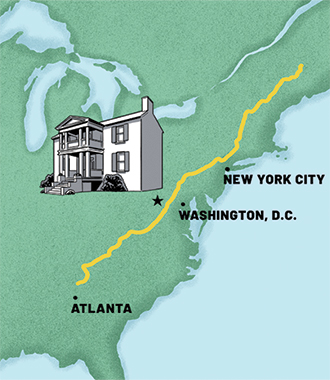
▶ The Appalachian Trail (AT) is the world’s longest hiking-only footpath, spanning 2,198 miles and passing through 14 states from Georgia to Maine. Mountain Home sits 973 miles from the trail’s southern terminus.
▶ More than 3,000 people attempt to thru-hike the AT each year, and roughly 33% complete their trek. Thousands more section-hike the trail, completing the journey over years — or a lifetime. The trail received nearly 17 million recreational visits in 2025.
▶ The AT was officially connected in 1937. The Appalachian Trail Conservancy (ATC) has led trail management since 1925. The ATC monitors wildlife and rare plants, manages invasive species and protects the 370,000-acre trail corridor. Thirty AT Clubs and 5,000 volunteers help maintain the trail, including the shelters, privies and bridges.
“I’m really proud of the work we do,” says Jeri Ward ’01 MEM MBA, the ATC’s chief growth officer. “National scenic trails like the AT are gateways to the natural world. It’s essential that we protect these trails, and public lands in general, so that future generations can enjoy that sense of wonder and respite from our busy lives.”
Map illustration by Joel Kimmel
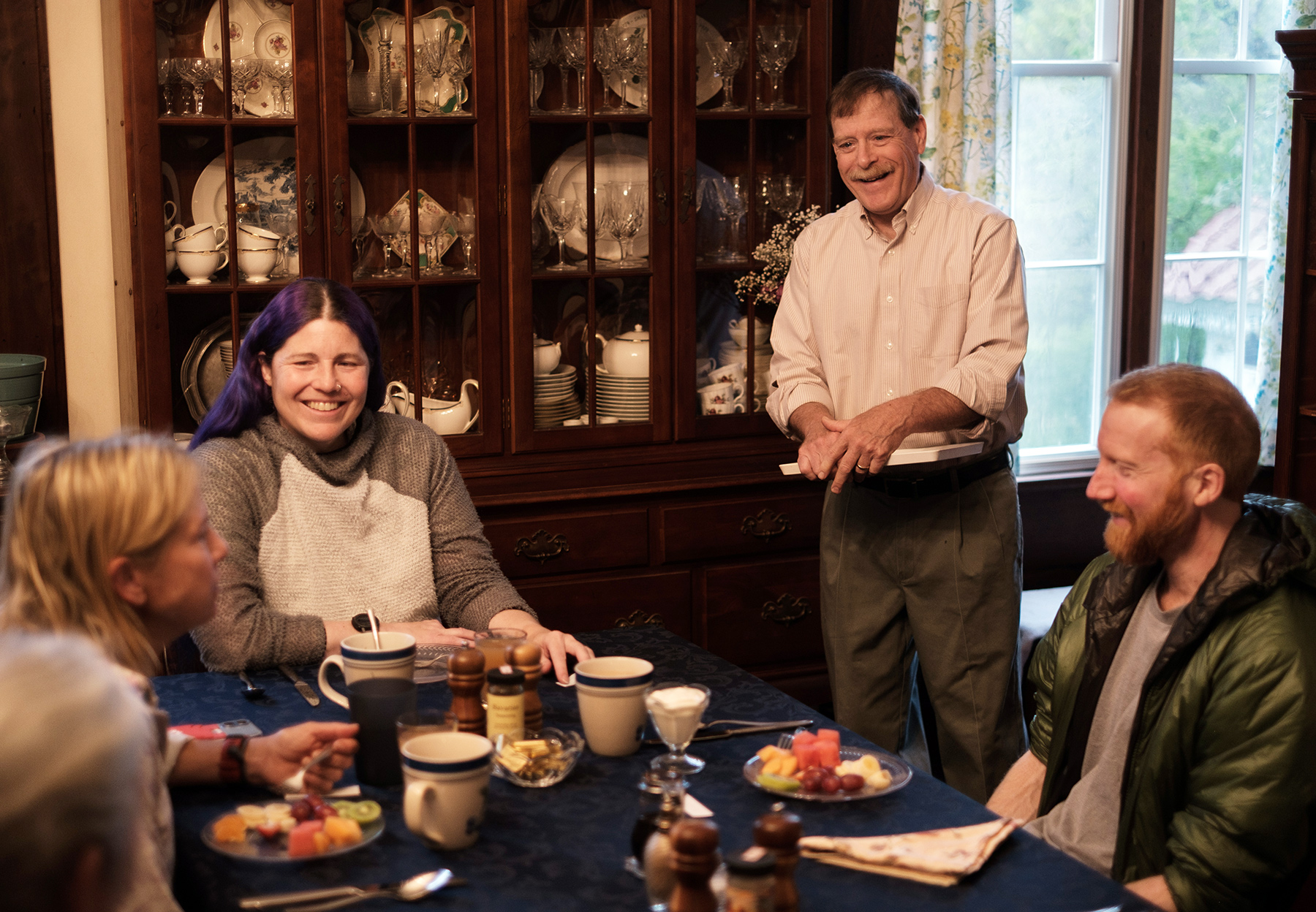
While Scott and Lisa continue preparing breakfast, hikers gather in the parlor adjacent to the dining room to plan their days.
John Ezzy, a data engineer from a coastal city near Sydney, Australia, was granted a six-month visa to thru-hike the AT. Ezzy, whose trail name is van Gogh, says hiking the AT was part of his answer to a midlife crisis. Mountain Home reminds him of his own home. “I think it’s the pine floors, the artwork on the walls ... the sense of space and peace,” he says.
Rainbow Sunshine — yes, that’s her legal name — goes by the trail name Plain Jane, an ironic moniker given her bright purple hair. Sunshine, who lives in Cottontown, Tenn., had trekked hundreds of miles northbound from the AT’s southern terminus at Springer Mountain, Ga., before she fell and broke her shoulder in Marion, Va. Now she is doing day hikes on the AT, using Mountain Home and other hostels as her home base.
Anne Vereen, of Nashville, is hiking the AT in 650-mile sections each year. A survivor of breast cancer, a heart attack, a burst appendix and sepsis, she goes by the trail name Five Lives. Vereen has stopped by Mountain Home in part to pick up a resupply box she had mailed there that includes her heart medication.
“We’re not promised tomorrow,” Vereen says. “I would like to think that when I go, it will be said that I did everything in life that I possibly could.”
One gift of serving hikers, the Jenkinses say, is the wide range of people they encounter. “Every hiker comes in smelly, tired and dirty, but that doesn’t tell you anything about them,” Scott says. “You have to spend time with people to get to know who they are. You’ve got to be open and receptive and not judge. ... A lot of people are in some sort of transition phase in their life, and the trail is helping them think through and prepare for those transitions.”
Lisa says the gratification of serving guests from all over the world — helping them with hiking logistics or talking with them about travel — motivates her, even in moments when their routines seem relentless.
It’s equally fulfilling, she says, to be a part of the trail community that supports and encourages AT hikers. “It is people helping people,” she says. “It’s a microcosm of what you’d like the rest of the world to be.”
Allison Salerno ’88 MS is a freelance writer based in Athens, Ga. She is section-hiking the Appalachian Trail.
Check out these related stories...
After three years spent dreaming about the hike, Elizabeth Weingarten decided to climb Mount Kilimanjaro the week of her 30th birthday — the perfect moment to figure out what she was doing with her life.
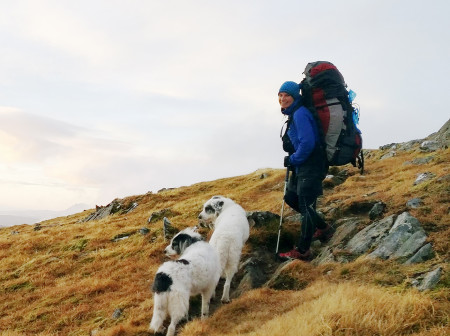
On June 26, ultrarunner Jamie Aarons set a world record for scaling all 282 Munros (mountains in Scotland that are taller than 3,000 feet), traveling only by foot, bike and kayak. She compressed what many hikers set as a lifetime goal into just one month, completing the self-propelled circuit in 31 days, 10 hours and 27 minutes.
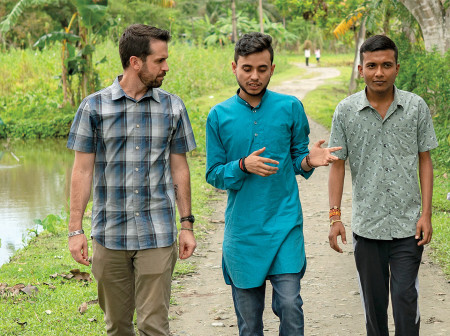
After a treacherous 45-day climb, Chris Bombardier reached the 29,032-foot summit of Nepal’s Mount Everest in May 2017. It was numbingly cold, but Bombardier felt nothing but pride in what he had accomplished for the hemophilia community: He became the first person with the bleeding disorder to climb the world’s tallest mountain, knowing full well that an accident during the ascent could lead to a dire situation.
Reader Responses
Staying in the historic Cabbin at Mountain Home B&B in August 2026 was one of the highlights of my Appalachian Trail section hike this year — and I can’t wait to return for the southern section! Fascinating story and history.
—Janell B. Staatsburg, N.Y., via Northwestern Magazine
I met Lisa and Scott after they purchased this property and joined our local Appalachian Trail Community committee to share their vision, enlist our support and join our mission. Witnessing their journey and having the honor to call them our friends and colleagues is a blessing. They are also involved in important community work and always bring thoughtfulness, intention and kindness to their contributions. It's a great place to stay, breakfast is delish, and there are always drinks and cookies in the lobby. Happy Trails!
—Susan J. Tschirhart Front Royal, Va., via Northwestern Magazine
That is such a well-written article about some wonderful friends and supporters. I appreciate the in-depth look into a special place.
—Alison Coltrane Luray, Va., via Northwestern Magazine
No one has commented on this page yet.
Submit a Response