Remembrances
Remembrances is a page to read memorials of Northwestern community members submitted by their family or peers. Visit In Memoriam to read featured obituaries of Northwestern alumni, faculty and staff. Submit an obituary.
Filter alumni by decade:
Narrow to:

Sean Jamieson ’87, Charlotte, N.C., April 19, 2026, at age 60. A journalist turned corporate communications executive, Jamieson started his career at the Spokane, Wash., Spokesman-Review and the Boise, Idaho, Statesman. After earning a master’s degree in public administration at Cornell University, Jamieson joined the Charlotte Observer in 1994, becoming assistant business editor. In 2008 he joined Bank of America, becoming senior vice president for financial communications and then a senior director at TIAA. Jamieson was an avid traveler who toured six continents, bringing his nieces and nephews on safaris in Africa; hikes through the Andes, the Pyrenees and the Himalayas; and holidays in Paris — always with a very detailed, well-planned itinerary. Jamieson enjoyed robust discussions of public policy, preferably accompanied by a glass of “good red” wine. Jamieson gave back to his community, helping build houses with Habitat for Humanity though his long-time parish, St. Gabriel Catholic Church, and regularly volunteered at the Second Harvest Food Bank. Following a wake in Charlotte, Jamieson had a second wake in his native Elmhurst, Ill., and was laid to rest in Hillside, Ill. He is survived by his mother, Carol Hattenhauer Jamieson; sisters Ellen Jamieson Sandoval; Lorraine Strittmatter; brother, Andrew Jamieson and many nieces, nephews and other family and close friends.
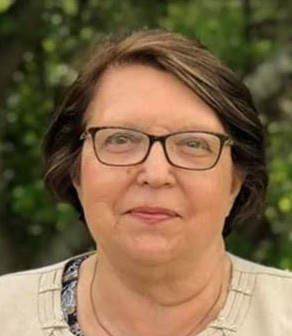
Elisabet Michaelsen ’72 MA/MS of Winchester, Va., passed away peacefully on February 26, 2026, at age 79.
Born in Nora, Sweden, on June 29, 1946, to Hilding and Aili Michaelsen, she was the youngest of three children. Elisabet grew up in Eskilstuna, Sweden, where her father owned and managed Svenska Kamrorfabriken AB and her mother served as the company’s bookkeeper.
Elisabet passed her studentexamen in 1964 and pursued higher education in speech pathology at Stockholm University. In 1969 she received a stipend through the Sweden-America Foundation and the U.S. Department of State to pursue a master’s degree in speech pathology at Northwestern. After completing her studies, Elisabet worked in Chicago at Misericordia Home, providing therapy to children and adults with mild to profound intellectual and developmental disabilities.
During this time Elisabet met her husband, Raymond Tenenholtz, and they were married in Chicago on December 7, 1971. In 1974 they embarked on a three-month bicycle tour of western Europe that unexpectedly led to a 16-year stay abroad. They first lived in Stockholm, Sweden, for ten years, where both daughter Helena and son David were born. Elisabet also continued to deepen her professional skills by completing training in the Bobath technique for neuro-disabilities in Innsbruck, Austria.
In 1984 Elisabet and her family moved to Jeddah, Saudi Arabia, where they lived for six years. There she played an early role in the formation of the Jeddah Institute for Speech and Hearing, the first clinic of its kind in Saudi Arabia.
After returning to the United States in 1990, Elisabet worked as a speech therapist in the public school system through several home care agencies and in her private practice, Focus on Speech. She also taught at the graduate level in George Washington University’s speech-language pathology program for three semesters.
Alongside her accomplished career, Elisabet became increasingly involved in advocating for equity and fairness for fellow health care workers. Through her steadfast efforts supporting home health care workers in the region, she was instrumental in the creation of the Organization for Home Care Professionals, America’s first union representing physical, occupational and speech therapists.
In retirement Elisabet turned her focus to local and state politics, supporting immigrant rights, affordable healthcare and climate action. She canvassed neighborhoods, housed campaign staff and led vigils to give a voice to the causes she valued. Until her final days, she coordinated a weekly political postcard-writing group at a local café, ensuring a steady stream of handwritten outreach to voters in critical elections nationwide.
Elisabet dedicated the 2018 holiday season to on-the-ground activism in Tornillo, Texas, drawing attention to the plight of thousands of unaccompanied minors detained in a government-sanctioned tent city. Driven by fierce moral conviction, she never hesitated to act on her belief in dignity for immigrants.
Beyond her professional legacy and community contributions, Elisabet will be remembered for a keen, observational wit. She had a wonderful knack for the "pointed" joke — a clever shorthand that fostered deep connections with those she loved. A lifelong engagement with the arts placed her as a regular fixture at concerts and museums and informed her own journey as a versatile musician. Moving effortlessly from the cello of her youth to the ukulele and the Swedish nyckelharpa, she was a marvel at family gatherings. Blessed with rare perfect pitch, Elisabet could play the piano by ear with ease and, on several occasions, even took it upon herself to tune the family instrument.
Elisabet learned to dye and spin wool, kept a four-harness weaving loom in the basement and maintained a “sewing room” where she dabbled in various projects. At quilt and needlework shows, she appreciated the craftsmanship of each piece, often noting the precision of a work’s backside as much as its front. A steady and attentive gardener, she delighted in coaxing her orchids to rebloom and marked special occasions with a new plant or a carefully chosen amaryllis bulb.
Above all, Elisabet’s life was marked by generosity, personal conviction and a quiet but powerful way of demonstrating, day by day, what it means to live with purpose. She will be remembered fondly and her memory lives on in her daughter, Helena; her son, David; and her four grandchildren, Axel, Viggo, Ezra and Ruby. Elisabet was predeceased by her parents, Hilding and Aili Michaelsen, as well as her older sister, Ulla, and her older brother, Torolf.
Dear Students,
Nobody asked, but I’d like to offer a little advice. I’ll make it quick.
Look around at your college friends and try to predict which one or two will have the greatest impact on your life.
You’ll probably get it wrong.
I’m writing this now, in an admittedly emotional state, because my friend Bob Kazel ’86 died Wednesday (Sept. 17, 2025), and I didn’t treat him that well when we were students.
I didn’t recognize how important he was going to be to me 10, 20, 30, 40 years later. I didn’t recognize how wonderful he was (I wrote “how wonderful he is” and had to backspace to change it, and now I have an ache in my chest) until we’d left Evanston, gone our separate ways and then reconnected years later. I didn’t recognize how he was suffering as a student because people like me didn’t warm up to him right away, and how that made him feel isolated, unseen and lonely.
I mean, we were friendly. We worked together at The Daily. We went to a Sox game together once. But he lived off campus, with his mother, in north Chicago. He didn’t attend parties. He wasn’t there for the late-night bull sessions that cemented many of my other friendships. And, OK, he was sort of weird, too. He looked like a 6-foot-2 Muppet. He geeked out on Star Trek. He dressed like an old man. I might have teased him for being less than cool.
And then, after graduation, he wrote me a letter. He said he wasn’t going to take the job he’d been offered at The Miami Herald because he was in the hospital. He had what was then called manic-depressive illness.
As our letters traveled back and forth across the country, he explained what that meant, because I had never heard of it, and how it had been a part of his life for years, which was why he hadn’t lived on campus. I had never asked.
But now I could ask, so I did. And that’s when our real friendship began. Soon after that, he told me he was gay, which further explained why he’d felt isolated on campus.
Our friendship lasted 40 years. Through more manic episodes and bouts of depression and hospital stays than I can count. Through jobs that came and went.
There were more moments of joy than sadness. He danced at my wedding. He recorded his favorite karaoke songs for my daughter on the day she was born. He never missed a holiday dinner at our table unless he was sick. My kids called him Uncle Bob.
For the past few years, he lived in a nursing home. The medication he took all those years destroyed his kidneys, and he needed dialysis three times a week. Then came cancer. But he seldom complained.
He proudly shared his life story recently for a book called Profiles in Mental Health Courage. He served earlier this year as a judge for a high school newspaper journalism contest. He volunteered on a suicide hotline. When I saw him two weeks ago, he was full of jokes and almost as giggly as the 20-year-old Muppet I once knew.
He may have been the bravest person I ever met, and he was certainly one of the kindest. Kindness, it turns out, is much more important than coolness in a friend.
So, I guess that’s my advice. As you look around campus and try to guess which friends you’ll still love and need in your lives forty years from now, you will have a better chance of guessing correctly if you factor in kindness. If you’re lucky, you might even find a friend like Bob Kazel.
Written by Jonathan Eig ’86. This essay (“Eig: On Seeking Kindness and My Friend Bob Kazel”) originally appeared in The Daily Northwestern on Sept. 19, 2025.
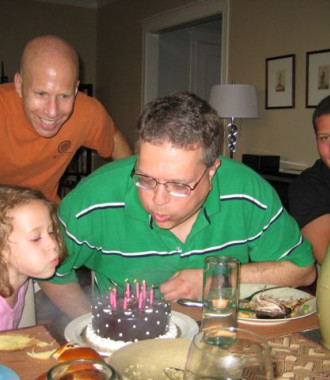
Photo caption: Bob Kazel celebrates his birthday in 2008 with Jonathan Eig and family in Chicago. Photo credit: Jennifer Tescher
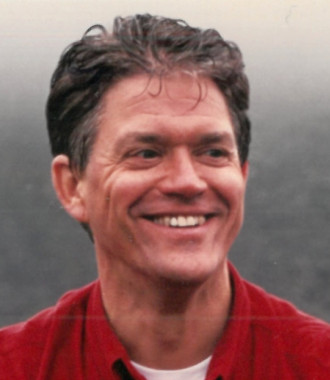
Scott Douglas Westrem ’77 MA, ’85 PhD, a distinguished scholar of medieval literature, historical geography and travel narratives, died at age 71 in September, 2025, at home in St. Louis Park, Minn. His scholarship explored how the medieval mind described the known and imagined world; his teaching inspired CUNY students at Lehman College and the Graduate Center.
Born in Minneapolis in 1953, he graduated from Minnehaha Academy. He then earned degrees in German and English at Whetton College (Illinois) and a doctorate in English from Northwestern. His scholarly residences included years in Oslo, Heidelberg, Paris and Stonington, Conn., where he was a Merrill Scholar. At CUNY he was able to inspire undergraduates ¬ — including bus drivers, working mothers and young hip-hop musicians —to understand, appreciate and recite Chaucer's Canterbury Tales, as well as mentor doctoral candidates in the minutiae of medieval manuscript analysis and interpretation.
His seminal work of scholarship was The Hereford Map: A Transcription and Translation of the Legends with Commentary, which transformed the academic understanding of the world's largest surviving medieval world map, or mappamundi, dating from c. 1300. In a review, Roger Mason wrote: “Two things are very clear – Westrem's linguistic agility, and the depth of his knowledge. He has given us the result of many years of labour; this encyclopaedic book is the most important work on the Hereford Map yet printed, and all future studies must start from it.”
He also wrote Broader Horizons: A Study of Johannes Witte de Hese's Itinerarius and Medieval Travel Narratives and edited Discovering New Worlds: Essays on Medieval Exploration and Imagination. With Charles Ryskamp, he co-edited The Works of John Chalkhill.
Colleagues, students and friends will remember him for his warmth, humor and generosity. He was interred at St. John’s Abbey Cemetery in Collegeville, Minn., in May, with a July 25 memorial service at Mindekirken, the Norwegian Lutheran Church in Minneapolis.
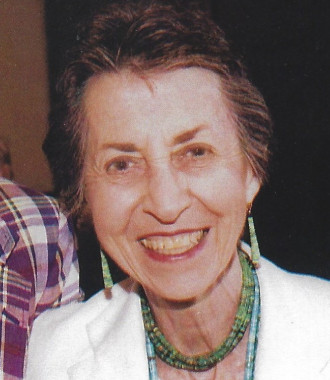
Judith “Judy” B. Daskal ’51 passed away in Mill Valley, Calif., on July 30, 2025, at age 95. Born in Leipzig, Germany in 1929, she, her older brother, and parents fled Nazi Germany in 1936 and settled in Chicago. Judy and her husband, George H. Daskal, were married for 64 years until his death in 2020.
Judy attended the University of Chicago Laboratory Schools, graduating in 1946. She subsequently graduated from The University of Chicago College in 1949. In 1951 she earned a bachelor’s degree in psychology from Northwestern.
Judy returned to The University of Chicago and earned a master’s degree in education in 1974. For 50 years, she specialized in tutoring children with dyslexia and worked with a number of adults as well. She was passionate about her work. Through her tireless efforts, she made an enormous difference in the lives of her students, a great many of whom kept in touch with her throughout the years.
Judy loved art, literature, movies, music, theater and opera, and imbued all of her daughters with the culture she cherished. She was extremely well-read and always keenly aware of current events, politics and world affairs. Judy loved to travel, especially to Europe and the American Southwest. She was an avid photographer of people and landscapes and enjoyed developing many of her photographs herself. She was an enthusiastic tennis player for much of her life and introduced her daughters to the game, which they enjoyed together for many years.
In 2022, after 86 years in Chicago, Judy moved to The Redwoods, a senior residential community in Mill Valley to be near her daughter, Kathryn, and her family. Judy was actively involved in this vibrant community and made many lovely new friends during her time there.
Judy is survived by her daughters Elizabeth, Jessica and Kathryn; and grandchildren Lowell, Jane, Simon and Torran.
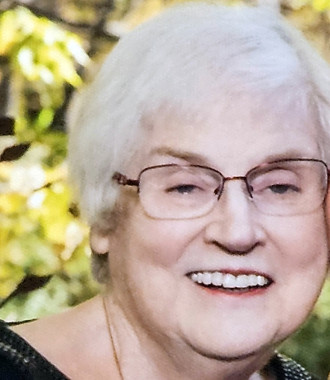
Cathy Smith Martin ’70 MS passed away on May 24, 2024, in West Des Moines, Iowa. She began working for Northwestern in 1967 in the registrar’s office, eventually retiring as the Associate Dean of Speech in what is now the School of Communication in 2002. She was born January 24, 1944, in Live Oak, Calif., and received her bachelor’s degree at Bemidji State University.
In her retirement, she enjoyed reading and spending time with her children and grandchildren. She remained a Northwestern fan, always watching the Wildcats on TV or reminiscing about the many illustrious students she knew during her time in the School of Communication, several of whom are now successful actors and entertainers.
She is survived by her husband of 59 years, Wayne, who also retired from Northwestern after ten years in the engineering department; her daughter Carolyn (John) and four grandchildren.
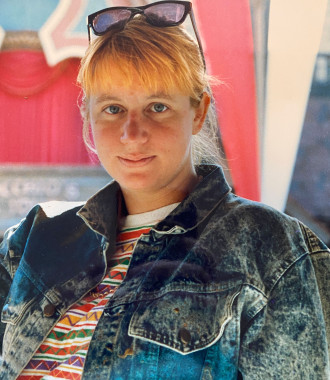
Genevieve Tasha Dougherty ’83 passed away on May 6, 2024, in Alameda, California. Following Northwestern and her graduation from UC Berkeley School of Law, Genevieve (fondly known as Gigi and “the Vieve”) worked as a real estate attorney for Brobeck, Phleger & Harrison, and American Stores, Albertsons and Safeway corporations until her retirement in 2017. She was born October 16, 1961, in New York City and raised in Westport, Conn.
Gigi was passionate about dogs, art, travel and the unusual. She had a brilliant mind and could surprise anyone with an idea of something fun to do, a geographic or historical anecdote or — after a cautious waiting period — an observation that was absolutely on point. She enjoyed her wonderful home in the Bay Area, spending time creating mixed-media art projects, traveling with friends and family in Africa, Asia, Europe, Russia and the U.S., and was game for anything that led to an adventure.
During retirement, Gigi enjoyed fostering dogs, not having to set morning alarms, and time with family and friends. Gigi is survived by Rosie, her foster-forever dog; her dear friends; and her cousins Catherine "Kate" Foster-Anderson and John Foster.