
Celebrating Alumni Who Inspire
The Northwestern Alumni Association bestows its greatest honor, the Alumni Medal, on four alumni for their professional achievement and service to the University.
The Northwestern Alumni Association will present its highest honor to three graduates. By Elizabeth Station
In October the Northwestern Alumni Association will present its highest honor, the Alumni Medal, to three graduates whose achievements and service exemplify leadership and excellence.
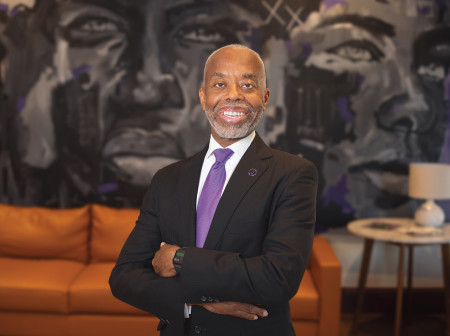
Dr. James Hill doesn’t hold back when he reflects on the impact his alma mater has had on him — academically, personally and professionally. “Northwestern hasn’t just helped me,” he says. “It has given me everything I have.”
Northwestern connections shaped Hill’s trajectory from an early age. As a youth he frequented a boys club in his West Side Chicago neighborhood. When Northwestern students who tutored at the club invited the youth members to visit the Evanston campus, “that sparked my interest in the University,” Hill says. “When I grew up, African Americans didn’t go north of Chicago Avenue [a street north of the Chicago Loop], so the North Shore was a whole new world.”
Later, as a first-generation college student and scholarship recipient, Hill earned a bachelor of science in medicine. He then completed his medical degree and residency and embarked on a distinguished five-decade career as an orthopaedic surgeon and professor — all at Northwestern. “My experiences taught me to persevere and not let the world dictate what I could do,” he says. “I learned at Northwestern that I have no limits. I can only limit myself.”
Hill met Sandra Small Hill ’71, ’74 MA at a new-student orientation, and the couple wed as undergraduates. Married for 50 years, they raised three children, including Melanie Hill ’12 MBA, before Sandra died in 2020.
In 1968 both James and Sandra were among more than 100 students — now known as the Black 100 or B100 — who peacefully occupied the University’s Bursar’s Office to protest the Black student experience at Northwestern. Their activism led to increased Black student enrollment, the creation of the Black House and other changes.
As a medical student, Hill attended classes by day and worked nights at the U.S. post office in Evanston, sorting mail to earn extra money.
He chose orthopaedics, specializing in sports medicine and shoulder and elbow surgery, because he enjoyed helping patients heal. Today, he says, “I look at being a physician as an opportunity to make people better every day.”
Hill joined the Feinberg School of Medicine faculty in 1980 as an instructor and became a professor of orthopaedic surgery in 1994. He has since taught and mentored countless students, presented and published widely in his field, and served on the Northwestern Memorial Foundation’s board of directors and as chief of staff of Northwestern Memorial Hospital.
An inveterate volunteer, Hill tutors in public and Catholic schools in Chicago and has served on the boards of the Dr. Martin Luther King Jr. Boys and Girls Club of Chicago and Talladega College. He has provided care and taught orthopaedics in Ethiopia and was a team physician for the 1988 U.S. Olympic Team in Seoul, South Korea. As a founding member and past president of the J. Robert Gladden Orthopaedic Society, Hill also has worked to increase inclusion within the orthopaedic profession and promote high-quality musculoskeletal care for all.
Hill has remained deeply involved with his alma mater as a board member and past president of the Northwestern University Medical Alumni Association and member of the Northwestern University Black Alumni Association (NUBAA). He was inducted into NUBAA’s Hall of Fame in 2007 and received a Northwestern Alumni Association Service to Northwestern Award in 2024.
“Northwestern has been pivotal in my life because it allowed me to live up to my full potential and be my authentic self,” he says.
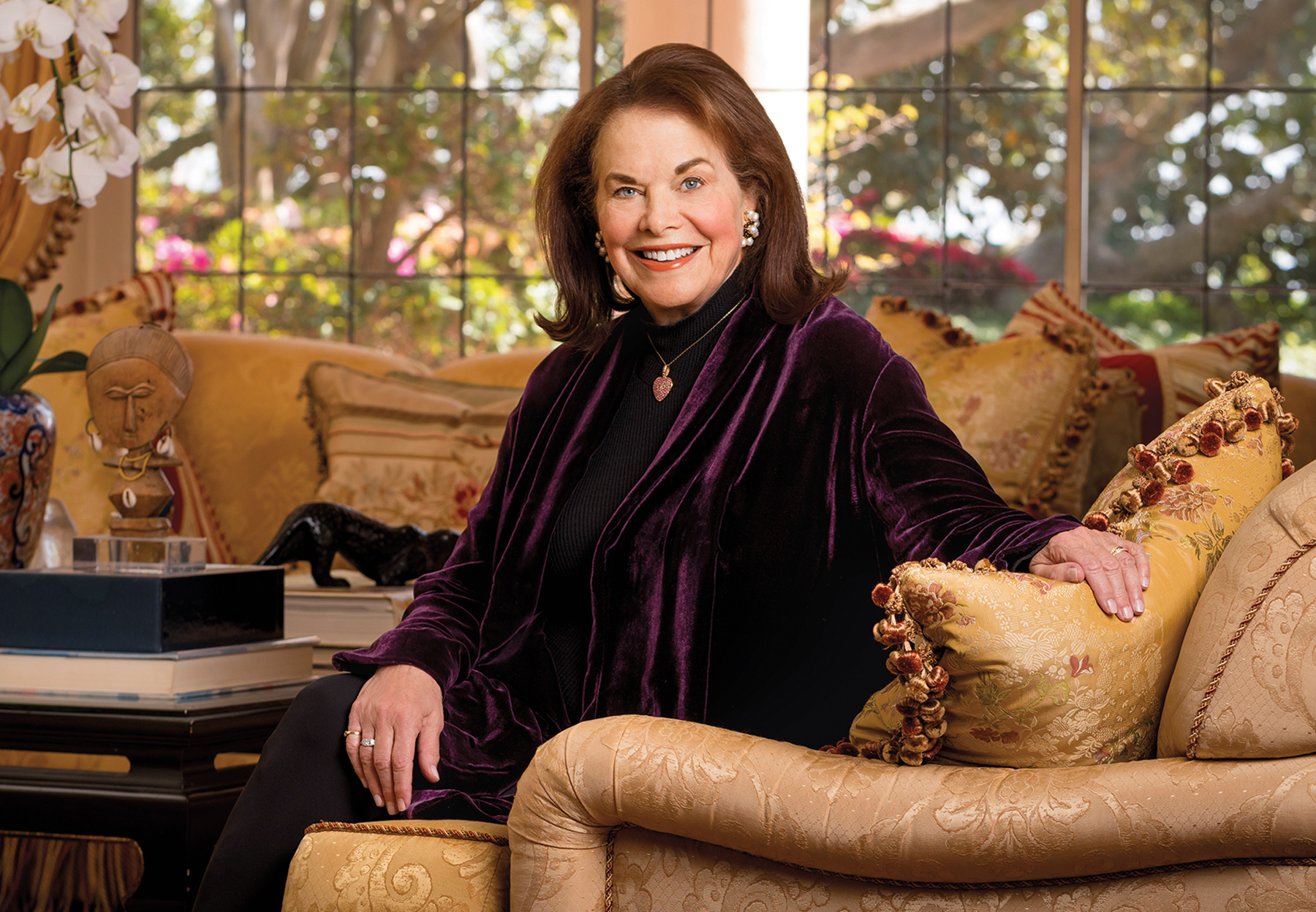
Sherry Lansing knows what makes a compelling story. A great script, she says, must evoke an emotional response and make you care about the people in it. That rule guided her for nearly 30 years in the movie business and helped shape her second act.
Over her career, Lansing helped produce, market and distribute more than 200 films, including Academy Award winners Forrest Gump and Titanic. But back in 1962, when she enrolled in Northwestern’s School of Speech (now the School of Communication), she wanted to be an actor. She studied theater and communication while also training to be a teacher. “I got an incredible education,” Lansing says. Along with her academic foundation, she gained the confidence to pack her belongings on graduation day and drive west to chase her acting dream.
After arriving in California, she taught high school English and math in Los Angeles and quietly tried to break into film. But after landing a few roles, she says, “I found I couldn’t stand being anyone but myself.”
Changing course, Lansing took a job reading scripts at MGM, giving her opinions and writing synopses for film producers and executives. She’d found her calling. Lansing worked her way up from script reader to head of readers, then executive story editor and vice president at Columbia Pictures. In 1980, at age 35, Lansing became the first woman to head a major film studio as president of 20th Century Fox.
She later became an independent producer, responsible for successful films including Fatal Attraction and The Accused. In 1992 Lansing began a 12-year tenure as chairman and CEO of Paramount Pictures. She currently chairs the board of Universal Music Group and serves on the board of directors of Paramount Skydance as well as several nonprofits.
At every step, Lansing believes her Northwestern education prepared her to succeed. “Learning about literature helped me understand what a good script was,” she says. “Math taught me how to read a budget. Studying communication, I learned to express myself and listen.”
When Lansing’s passions began to shift from filmmaking to philanthropy, she discovered meaningful work beyond the studio lot. After retiring at 60, she launched The Sherry Lansing Foundation in 2005 to honor the memory of her mother, who died of ovarian cancer. The foundation supports cancer research as well as public education, encore career opportunities and other causes.
Over the next three years, Lansing co-founded Stand Up To Cancer, which has raised more than $825 million for collaborative research. She also created EnCorps, a nonprofit that recruits STEM professionals to teach math and science in underserved schools.
Philanthropy is a bit like filmmaking, Lansing says. “If you have a good idea, you have to gather other people around you who care. You have to raise the funding to support that idea. And if you do those things, I think you can change the world.”
Ever devoted to Northwestern, Lansing joined the School of Communication’s Board of Advisors in 1989 and remained a life member until the board concluded its work in 2021. She has received both the Alumnae of Northwestern University’s Distinguished Alumnae Award and an honorary degree from the University.
But it’s not public recognition that inspires Lansing’s loyalty. “I want to give back to Northwestern because it shaped me, formed me and made me who I am,” she says. “I want the University to continue to thrive, and I’ll do anything I can to help it.”
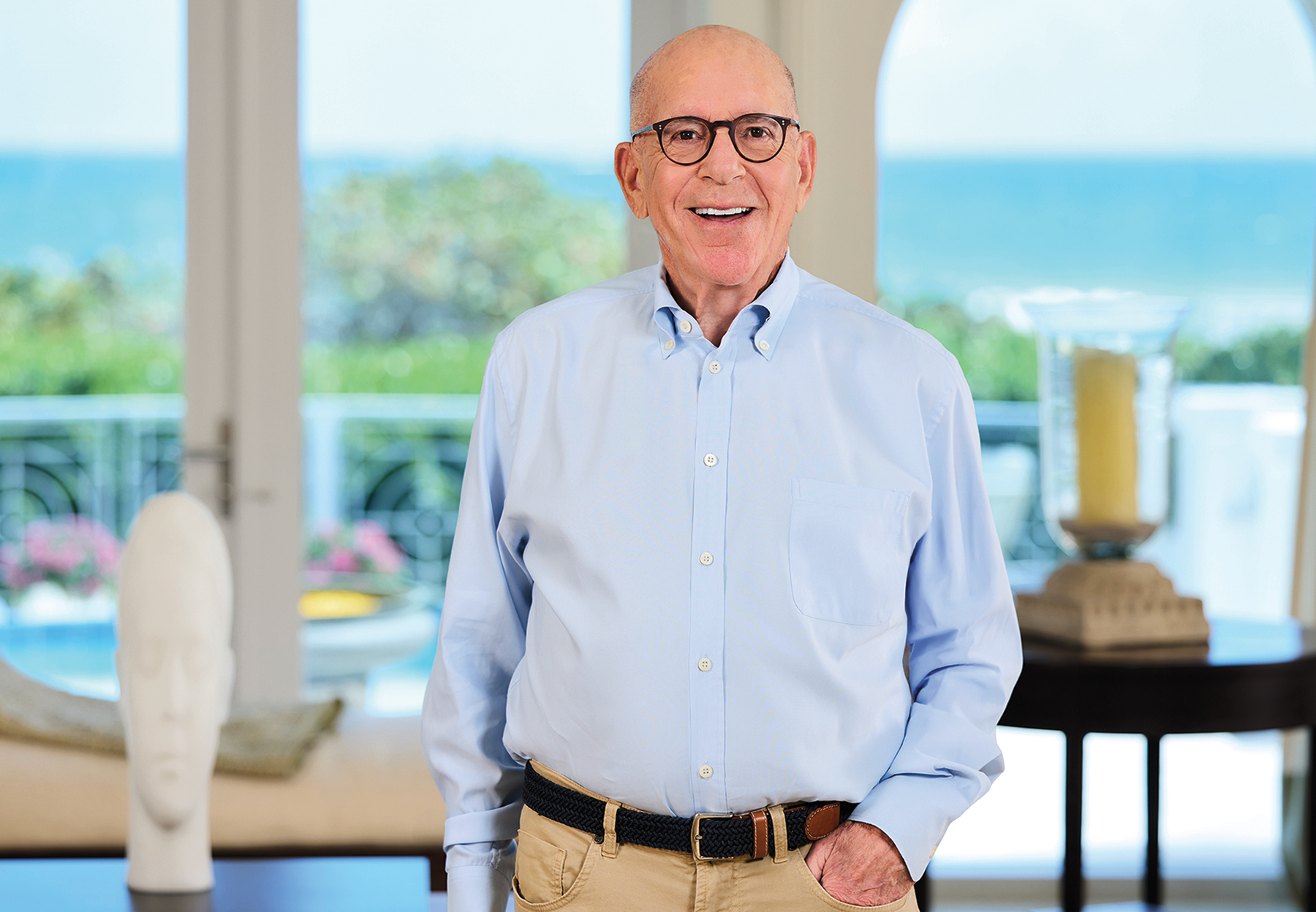
Before arriving at Northwestern to study business, Larry Levy had no grand plans for himself. A first-generation college student, he grew up in a middle-class family in St. Louis and applied to Northwestern at the encouragement of a friend and future Phi Epsilon Pi fraternity brother.
Once on campus, Levy found peers and opportunities that raised his expectations. “My fraternity class was full of brilliant, ambitious, charismatic people like I had never met before,” he recalls. “I knew I had to up my game.”
He upped it — and then some — earning a spot on the freshman basketball team while pursuing new business ideas. By his sophomore year, Levy had started a campuswide laundry service, a music band–booking operation, a popular coupon booklet for local businesses and a gig arranging students’ summer flights to Europe.
Levy says those hands-on experiences and the people skills he honed at Northwestern set him up for success. “I had to learn how to be persuasive while being honorable, set a good culture and deliver what I had promised to customers,” he says. “What’s more, I heard the word ‘entrepreneur’ for the first time, and I said, ‘That’s for me.’ I haven’t stopped since.”
After earning his MBA at Northwestern’s School of Commerce (now the Kellogg School of Management) and serving in the Green Beret reserves during the Vietnam War, Levy joined a fledgling Chicago commercial real estate firm, became its president and launched his own company by his late 20s.
One of Levy’s first real estate ventures, One Magnificent Mile, became a landmark Chicago development — but not without risk. He borrowed $100 million to launch the high-rise building project in the late 1970s just as interest rates were surging.
“I made no money,” he says. “But I made my reputation on that project, because I didn’t give up and made sure everyone got paid.”
In 1978 Levy and his brother, Mark, opened D.B. Kaplan’s, a delicatessen in Chicago’s Water Tower Place, drawing on their family’s love of food and their mother’s recipes. The deli’s success led to Levy Restaurants, a Chicago-based food service operation built on a disruptive idea: bringing restaurant-quality dining and Midwestern hospitality to sports and entertainment venues, where the standard fare had always been hot dogs and peanuts.
The company grew to serve more than 450 venues and opened a network of restaurants. They also catered marquee events, including the Super Bowl and Grammy Awards. Levy sold the company in 2006. With his sons, he now manages Levy Family Partners, which includes a portfolio of real estate, operating businesses, venture capital and other investments.
Through it all, Northwestern has stayed central to Levy’s life. He joined the University’s Board of Trustees in 2004 and later became a life trustee. As a longtime member of Kellogg’s Global Advisory Board, Levy has championed entrepreneurship. He and his wife, Carol Neims Levy ’64, endowed the Larry and Carol Levy Institute for Entrepreneurial Practice at Kellogg, a springboard for student and faculty ventures. Levy also invested in The Garage, Northwestern’s space for student innovators, and supports VentureCat, an annual student startup competition.
Today Northwestern “is on fire with entrepreneurship,” Levy says. He and Carol also underwrite the Levy Inspiration Grant Program and Levy Inspiration Treks, which give Kellogg students immersive opportunities to meet founders and research their business ideas.
“My biggest learning was not in class — it was experiential,” Levy reflects. “And that’s what we’re trying to create for students.”
Elizabeth Station is an Evanston-based freelance writer.
The Alumni Medalists will participate in a livestreamed panel discussion on Friday, Oct. 9. Learn more.
Check out these related stories...
The Northwestern Alumni Association bestows its greatest honor, the Alumni Medal, on four alumni for their professional achievement and service to the University.
The 2023 Northwestern Alumni Medal recipients — Roberta Buffett Elliott ‘54, Chris Galvin ’73, ’77 MBA and Charles S. Modlin Jr. ’83, ’87 MD — are leaders in philanthropy, business and health care.
Will Evans, Renetta McCann and Bill Osborn earned the 2024 Northwestern Alumni Medal. The medalists will receive the Northwestern Alumni Association’s most prestigious award for exceptional achievement in their careers and service to Northwestern during Homecoming and Reunion Weekend.
Reader Responses
I am impressed and humbled by the astounding accomplishments of the three medalists — each one with an immensely successful career flanked by philanthropy contributions to society of equal impact. Congratulations to them, and appreciation to Elizabeth for penning the captivating articles.
—Thomas T.Y. Wong '81 PhD, '78 MS, Skokie, Ill., via Northwestern Magazine
No one has commented on this page yet.
Submit a Response